Nowadays, hair loss has become a common anxiety among young people, and the topic of "anti-hair loss care" continues to heat up. From wiping the scalp with ginger to the use of various anti-loss shampoos, people are constantly exploring the road of hair care. Recently, a new hair care method of "nourishing hair with oil" has quietly become popular in aromatherapy circles, among which rosemary essential oil is called "liquid hair growth agent". Many people find that after persistent use, the hair seam becomes narrower and the hair tips become stronger; Even Mr. Tony from the barber shop couldn't help making private recommendations.
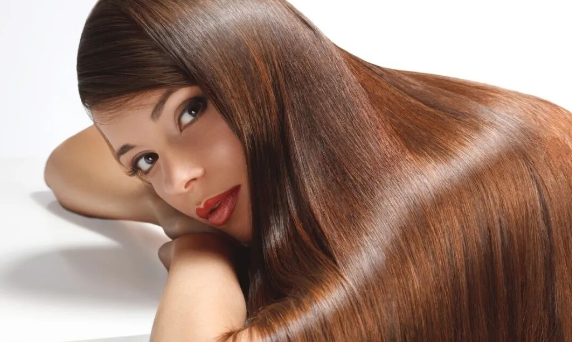
However, there are different opinions on the market about hair care with rosemary essential oil: some people say that it can be effective if it is applied directly; Some people complain that it leads to greasy scalp and acne. Why on earth can rosemary essential oil increase hair volume? How to use it scientifically? This article will make an in-depth analysis from hair care principles, practical steps, aromatherapy formula and other aspects, and open a new door to natural hair care for you who are suffering from hair loss.
1. The scientific code of rosemary essential oil hair care
1. Three core mechanisms that directly attack the root cause of hair loss
Hair follicle activation: wake up the sleeping hair follicles. The hair follicle stem cells in the dermis of the scalp determine the hair growth cycle.
Studies have shown that 1, 8 eucalyptus and rosmarinic acid, the main components in rosemary essential oil, can penetrate the stratum corneum of the scalp, stimulate telangiectasia around hair follicles, and increase blood flow to hair follicles by 43% (2015 International Cosmetic Science research data).
Just like irrigating the dry land, the hair follicle is easily full of nutrients, and the villi, which was originally in the telogen phase, begins to slowly transform into the growth phase.
DHT inhibitors: Blocking the culprit of hair loss The culprit in male hair loss (androgenetic alopecia) is dihydrotestosterone (DHT), which causes hair follicles to shrink. The antioxidant components in rosemary essential oil can inhibit 5α-reductase activity and reduce DHT production. The effect is comparable to 0.2% minoxidil solution (2019 "Skin Pharmacology and Physiology" control experiment), but there are no side effects of chemical drugs.
Scalp barrier repair: To create a healthy growth environment, modern people frequently dye and perm, and air pollution leads to damage to the scalp barrier and imbalance of water and oil, which leads to dandruff, sensitivity, oil production and other problems. Rosemary essential oil has antibacterial and anti-inflammatory properties, which can inhibit the excessive reproduction of Malassezia. Its fat-soluble components can also supplement the missing lipids of the scalp and rebuild the "scalp ecosystem" of water-oil balance.
2. The golden partner rule of "nourishing hair with oil"
Can't pure essential oils directly act on the scalp? This is indeed true! However, using it with base oil can double the effect. As a natural penetrant, oil can carry the active ingredients of rosemary deep into hair follicles, and form a protective film on the surface of hair, so as to reduce the physical damage caused by combing and blowing. The ideal logic of hair care is: first activate hair follicles through essential oils, then use water-based hair care products to replenish moisture, and finally use oil to lock nutrients, thus forming a closed loop of "oil protection, water and oil lock".
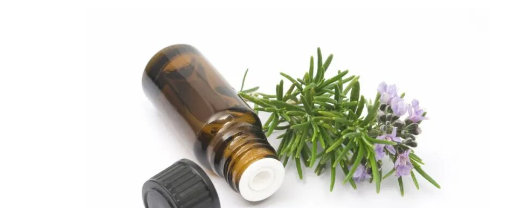

2. Three-step hair care method with rosemary essential oil: a practical guide from novice to advanced
Step 1: Hair follicle awakening massage 2-3 times a week
Base oil blending formula
Dry scalp: 2 drops of rosemary essential oil + 1 drop of cedar essential oil + 10 ml of jojoba oil (the molecular structure of jojoba oil is close to the natural oil of scalp, and it is quick to absorb and not sticky)
Oily scalp: 2 drops of rosemary essential oil + 10 ml of grape seed oil + 1 drop of peppermint essential oil (grape seed oil refreshes and controls oil, peppermint cools and soothes)
Sensitive scalp: 1 drop of rosemary essential oil + 10 ml of calendula soaking oil (calendula anti-inflammatory repair, reduce the risk of irritation)
Golden massage technique
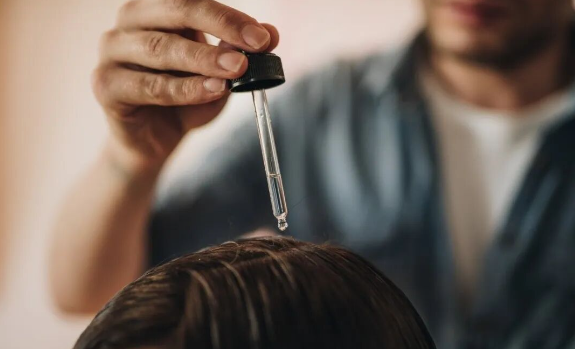
Drop the prepared massage oil on the palm and slowly rub it to heat it; Next, start from the hairline, gently circle and press with your fingertips, focusing on massaging Baihui point on the top of your head and Fengchi point on both sides (where there will be soreness and swelling when your fingers are pressed). Each part stays for about 3 seconds, as if you were doing "yoga" on your scalp. In fact, don't scratch with your nails. It's most appropriate to make your scalp feel slightly hot. After massaging for 5-8 minutes, wait quietly for 10 minutes, and then wash your hair.
Step 2: Shampoo water-oil synergy
1. Pretreatment before daily washing: oil application and knot opening
For dry and frizz hair, you can apply rosemary massage oil to the ends of your hair before shampooing, then wrap it for 15 minutes, and then wash your hair normally. This is equivalent to making an "essential oil hair mask" for your hair, and it is easier to rinse than commercially available conditioner, and there is no silicon residue at the same time.
2. Add essential oil after washing: strengthen locking care
After shampooing, rub until semi-dry; Next take 1 drop of rosemary essential oil and mix it with the conditioner hair mask. Focus on applying it from the middle to the tips of the hair, but seriously, you need to avoid developing roots. Essential oil molecules can quietly fill the gaps in hair scales, so that the blow-dried hair will show a simple and bright smooth feeling as "soft light".
Step 3: Daily preventionProtective spray (ready to use)
Advanced usage: Put 50 ml of rosemary hydrosol, 1 drop of rosemary essential oil and 5 ml of glycerin into a spray bottle, and spray it on the scalp and hair before going out every day. It can not only keep the scalp fresh, but also form an "invisible protective shield", thus reducing the damage caused by ultraviolet rays and air pollution to hair and scalp.
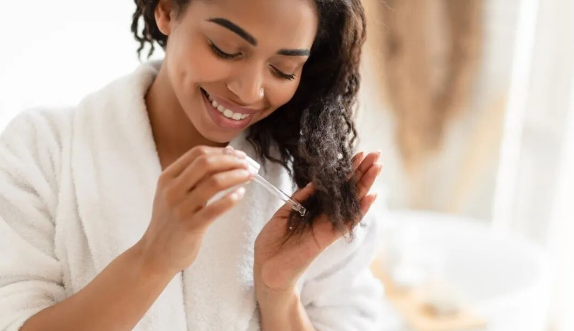
3. Who is suitable for use? Be careful with these situations!
1. Recommended crowd: Three types of people have the most significant effect
People in the early stage of hair loss (hair seams are widened, more than 50 hairs fall out after washing their hair):
The hair follicles have not been completely closed, and rosemary can easily and happily block the process of hair loss in time. Usually, the new villi can be seen in about 48 weeks.
Dry sensitive scalp:
Long-term iron dyeing will lead to dehydration and sensitivity of the scalp. The anti-inflammatory properties of rosemary can relieve itching, and if it is matched with nourishing base oil, it can also rebuild the scalp barrier.
Soft hair wants to increase hair volume:
Essential oil promotes the proliferation of hair papilla cells, makes new hair thicker, and increases the hair volume by 20%-30% visually. There are individual differences.
2. Use with caution or disabling
In the period of acute scalp inflammation, such as the attack of seborrheic dermatitis, the scalp is damaged or has pustules. In this case, essential oils may aggravate the irritation at this time, so you need to go to medical treatment first.
Pure essential oil contacts the skin directly: undiluted rosemary essential oil may cause burning, redness and swelling, so the principle of "low concentration blending" must be strictly followed, and the total essential oil concentration of face and scalp is recommended to be ≤ 3%.
If the oily scalp is overused, people who are inherently oily should use it every week. If it is used more than 3 times, it may cause pore blockage; Therefore, it is recommended to pair it with deep cleaning shampoo, and it can be used alternately.
4. Aromatherapist's guide to avoiding pitfalls: 5 key points to double the effect
1. Two iron rules for choosing the right essential oils
Look at the extraction method: give priority to rosemary essential oil (CT 18 eucalyptus type) extracted by "steam distillation", and avoid inferior products extracted by chemical solvents. High-quality rosemary essential oil is colorless and transparent under light, and has fresh herbal aroma instead of pungent smell.
Skin feeling adaptation: Apply the prepared massage oil behind the ears, and then apply it on the scalp after there is no redness or swelling within 24 hours. For sensitive skin, it is recommended to start with 1 drop of essential oil with 1% concentration plus 10 ml of base oil to build tolerance.
2. Common misunderstandings crusher
Myth 1: Using rosemary essential oil has no effect, it must be a fake? Truth: The hair growth cycle is about 3-6 months, and it takes at least 8 weeks to observe the change. At this time, it is necessary to cooperate with a healthy routine (staying up late will offset 40% of the effect!
Myth 2: After oil application, scalp acne. Is it because the essential oil is too greasy? The actual situation is: perhaps it is because the base oil is not properly selected, such as mineral oil that is easy to induce acne; Or maybe the intensity during the massage is too strong, resulting in damage to the hair follicles. It is recommended to replace the base oil with a light oil like grape seed oil, and try to use gentle movements during massage.
Myth 3: Rosemary essential oil, can replace hair growth drugs? Truth: As a natural maintenance method, it is more suitable for prevention and mild hair loss. For moderate and severe hair loss (such as the obvious backward movement of the hairline), it needs to be combined with medical measures, and essential oil can be used as an auxiliary repair plan.
3. Personalized efficiency improvement plan
Zoning care method: massage the hair loss area on the top of the head with rosemary and cedar essential oil; For split ends, topical treatment with rosemary plus jojoba oil. One bottle of essential oil can solve many problems.
Seasonal adaptation adjustment: replace it with rosemary in summer, and add peppermint grape seed oil (this is a refreshing oil control product); Use rosemary in winter, add shea butter, and lavender to achieve deep nourishing effect. In this way, the hair care program can "change seasons" with the climate.

V. Conclusion
From ancient Cleopatra's use of rosemary for hair care to the verification of modern aromatherapy science, the power of this natural plant, which has been passed down for thousands of years, is gradually rewriting our cognition of hair care. Rosemary essential oil is not a miraculous potion, but provides a safer and more sustainable hair care option for modern people who pay attention to their own health.
Aromatherapists always emphasize that hair care is like raising a tree. Only the roots (that is, when the scalp is healthy, the branches, leaves and hair can flourish). In fact, instead of blindly following the trend and pursuing those quick-acting products, it is better to calm down, understand your scalp needs well, and use natural essential oils with scientific techniques. In this way, every hair care can become a deep nourishment for your hair.
Finally, a reminder: Any method of hair care must be patient and persistent. If you are ready to start this "scalp rejuvenation journey", you might as well prepare the first bottle of your own massage oil from today. Remember, the secret of true hair care lies in every gentle treatment of hair.
Disclaimer
- 1. This website aims to popularize skincare knowledge for readers;
- 2. The popular science content cannot replace doctors' diagnosis opinions, and is for reference only; If you have skin problems, please consult a professional doctor in time;